

A Virtual Memorial Foundation
is a media art project environment dealing with memory and commemorative aspects in form of a virtual foundation initiated, created and curated by Agricola de Cologne, who is also the President of A Virtual Memorial Foundation.
A Virtual Memorial Foundation had different realization phases. Most relevant for Agricola de Cologne’s life and his new artistic work since 2000 were the 9/11 terror attacks in New York. As a reaction the artist created the “Terror Memorial” – a collaborative work for collaborative commemorating, to be followed by the AIds Memorial, Rainforest Memorial and Tsunami Memorial, all of them were initiated as an reaction on most recent incidents at that time which formed the motivation to activate artists collegues world wide.
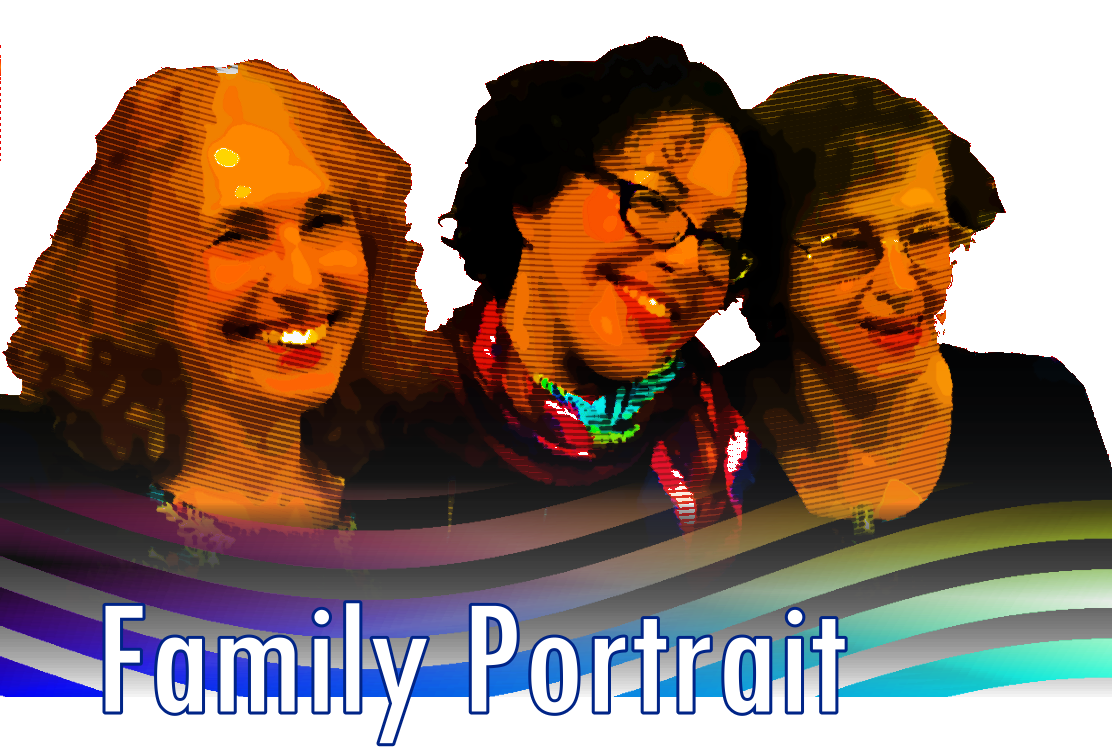 In 2003, Agricola de Cologne came in contacts with the Argentine Raquel Partnoy and, fascinated by the history of her life closely connected to the Argentine dictatoships of the 20th century, together with Raquel Partnoy as a co-curator, one of the Mothers of Plaza de Mayo (Buenos Aires Argentinia), he realised in 2003-2005 two commemorative projects “Women: Memory of Repression in Argentina” about the Mothers of Plaza de Mayo, in collaboration with some Argentine female artists – Anahi, Caceres, Irene Coremberg, Andamio Contiguo – an artists duo & Marina Zerbarini – and the other online project “Family Portrait” – a portrait of the diasporadic life of the Jewish Partnoy family. In 2005, Agricola de Cologne was invited to present both projects in Argentina – Buenos Aires, Junin, Rosario & Santa Fe, and later in 2005, Agricola de Cologne received the MOSAICA Award given by the YORK University Toronto/Canada for “The Family Portrait”.

The Argentina Memorial, featuring “Women: Memory of Repression in Argentina by Agricola de Cologne & Raquel Partnoy” was realised 2004/2005 and released 2005. After 10 years, the project is going to be reconstructed in 2015 – for technological reasons, because the original project files do not exist any more and updating and/or modifying the project is therefore not possible, and to be extended – because the political situation in Argentina changed profoundly since then.
The orginal project of W:MoRiA is now representing the basis for creating a new project which is taking this political developments – reflecting the totalitarian systems of Argentine military rulers – into account. The world knows now about the mass-excutions and all the mass-graves excavated during the past years, many of the “disappeared” has been identified meanwhile, the traumatized families got at least some releif, the Argentine people was establishing a kind commemoration culture which is marking the Argentine identity.
The historical and new project is referring to the thirty thousand persons who disappeared during the military dictatorships of the 20th century in Argentina, a war of the military against the own population, a genocide, which is also called “Argentine holocaust”. In this context is standing “Family Portrait”.
From the beginning, however, A Virtual Memorial Foundation was the manifestation of philosophical ideas, in this way the museum department is consisting of a wide range of projects as the manifestations of these ideas. The Humanism based on the ancient Greek philosophy as it was practiced in the Renaissance at the times of Martin Luther formed the basis of Agricola de Cologne’s high school education and had therefore a lasting effect on the entire intellectual and emotional development.
A Virtual Memorial Foundation incorporates all artistic projects by Agricola de Cologne based on an humanitarian background, dealing with the main topic “memory & identity” and new contemporary forms of commemorating by sensitizing people via art.
There are good reasons, why Agricola de Cologne’s entire work is dealing with “memory & identity” as the main topic, it was the loss of his memory caused by the several months lasting coma 1999 as the result of a hypertraumatization. Re-estalishing and reconstructing his personal memory after this profound victimization, had the effect that history generally became a most prominent issue in the conceptual development of “Agricola de Cologne” as a media art project. Dealing with the new context of “A Virtual Memorial Foundation” became an experimenting in defining himself as an artist, as well as a human individual, who was focusing his artistic work basically on curating. Curating, eg taking responsibility in the self created social contexts (A Virtual Memorial, JavaMuseum, VideoChannel and the numerous other projects) became his new artistic expression – virtually and physically alike – , whereby the difference between am museum curator and his curatorial activities became obviously online, as well as in the physical manifestations, because the conditions and motivations were fundamentally different, while the visually perceivable results seemed to be similiar.
By establishing himself a virtual artist on 1 January 2000, Agricola de Cologne released A Virtual Memorial Foundation the first artistic context created for the net aimed to keep vivid the memory of collective trauma via artistic interventions during the first years exclusively online, but since 2003 increasingly in an exchange between virtual and physical space. The project became this way “The International Center for Commemorative Interventions,  this became relevant since Agricola de Cologne created the project context “Draft Title: Shoah”, a continuation of the topic of Holocaust he had started 1993with the physical memorial project “A Living Memorial” and its manifestations 1995-1999. For the physical manifestations of Shoah Film Collection as a central part of “Draft Title: Shoah“, a new department has been established “AVMCI – A Virtual Memorial Center for Commemorative Interventions”, an experimental event structure placing the collection of artistic and documentary films and videos into the context of complementary interventions, such as lectures, screenings, exhibitions, performances of different kind kind, a symposium, artists meetings, artists talks an much more, in order to activate the artists, as well as the audience. From the point of view of Agricola de Cologne, it is this activation on the level of art, this is good for the artiosts as creators and the audience as recipients of art, which has the main relevance for fulfilling the goals of this initiative.
The project “A Virtual Memorial Foundation” would not exist without the turbulent history behind starting with the Fall of the Berlin Wall 1989, opening the doors to the Eastern part of Europe. Actually by coincidence, Agricola de Cologne founded earlier in 1989, the charitable society ARCHA Society (Archives and Research for Contemporary Humanism and Art) which was established an a charitable organisation at the court exactly on 9 Novemver 1989, when the Wall in Berlin was falling causing the collapse of the Communist systems in the East of Europe. 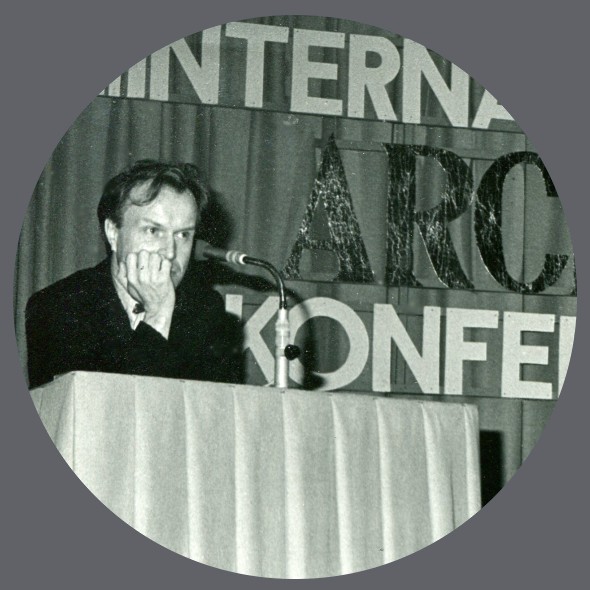 As the President of ARCHA Society, Agricola de Cologne suddenly found himself involved in historical processes with a global relevance, and became active as the organiser and curator of the projects to be realised in an cultural exchange between Eastern and Western Europe. The first project was the International ARCHA Conference in Goerlitz/Germany directly situated at the Polish boarder (2-5 May 1991). Standing under the Patronage of the Prime Minister of Saxony Prof. Dr. Kurt Biedenkopf, this conference and its organisation became a key experience for Agricola de Cologne, basically because he changed his position as an activist in art from a creative artist to a creative causing intensive travel activities to the Eastern European countries. In first place, he was establishing contacts to cultural institutions in the former Communist countries, but via the travelling he was increasingly confronted with the German history on the ground of these coutbries, and visiting the memorial sites of former concentrations camps like Auschwitz, Majdanek or Terezin had a lasting shocking effect, so that Agricola de Cologne felt the need to reflect his experiences in taking responsibility as a German artist born after World War II.

The result of these artistic reflections was the project “1000 Years, 50 Years an Still so Terribly Young”, (100 years was standing for the 100 years lasting 3rd Reich of Adolf Hitler – lasting in reality only 12 years, “50 years” was standing for 50 years after World War II , and “terribly young” was standing for the fresh revitalized Neo-Nazi ideology which was manifesting itself at that time not only in Germany , but in whole Europe daily), a project he created for being presented in 1995 after the inauguration in Cologne at 10 Polish museums on occasion of the 50th return of the end of World War II in 1995 as his personal contribution ofr a reconciliation with the Jewish, but also the Polish people.
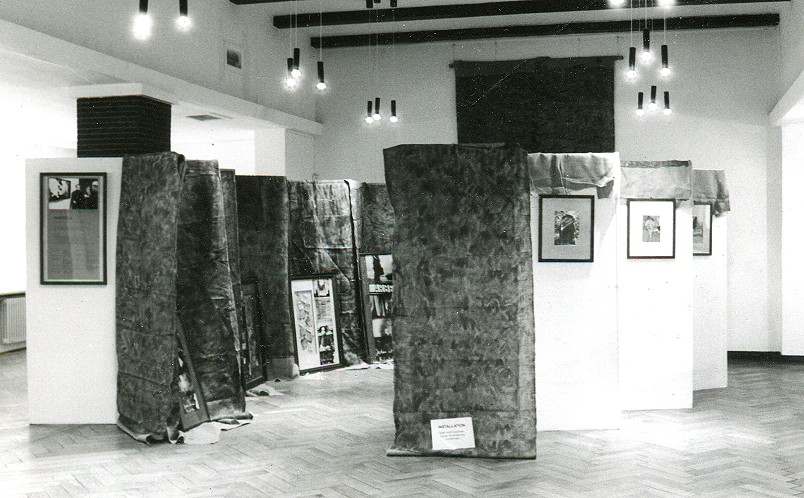 This project , subtitled: Memorial project against the Forgetting, Racism, Xenophobia and Antisemitism”, was standing under the Patronage of the late President of the Central Jewish Council of Germany, Ignatz Bubis, see listed on the right -; http://www.a-virtual-memorial.org/bubis/documentation.htm This mobile multi-facetted memorial project was installed exactly 43 times, in Poland, Czech Repuiblik, Belgium tand Germany, before in September 1998 a basic part of this project had been destroyed in an act of mad vandalism.
Initiated and launched on 1 January 2000, AVM Foundation represents the “mother” of the entire global Internet based network in which Agricola de Cologne is realising his ideas of dealing with memory and art in virtual and physical space in most different ways.
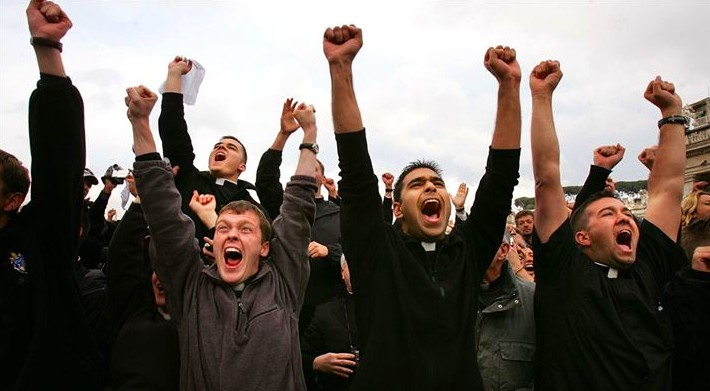 AVM Foundation started in 2000 with daily, weekly and monthly changing features, presenting selected memorial days on a global level and associated information, texts, articles and especially multi-media works created for these occasions by Agricola de Cologne, further invited online art projects by external artists.
This way, during the first three years – 2000-2002 – A Virtual Memorial offered views on how people in different parts on the globe are/were dealing with “memory” based on different cultures, religions and social backgrounds. These diaries are still online and can be accessed via the artistic body of “A Virtual Memorial”
A Virtual Memorial and its aims formed basically also the motivation to restart creating art works again after the attack in 1998. All later started projects are rooted deeply in A Virtual Memorial, reflecting memory in all its facets dealing with the newly acquired perceptions as ongoing process.
As such an ongoing “process”, A Virtual Memorial is hosting several individual memorial projects like Memorial for the Victims of Terror – (2001), Memorial for the Victims of AIDS– (2002) or Tsunami Memorial – (2005), aimed to create memorial space not only surrounding people, but inside of people. The Internet as a gigantic memory itself seemed to be the best place for realising such a kind of projects.
 Particularly the festival component of NewMediaFest brought the project unexpected developments and perspectives, starting with Violence Online Festival in 2002, a project environment dealing with the countless facets of violence.
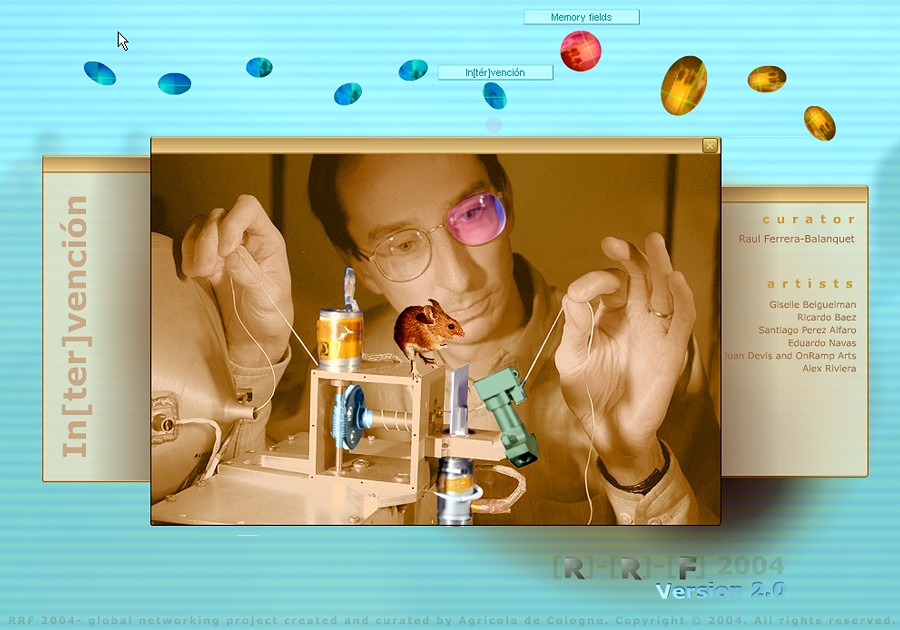 In 2003, the main activities were focused on the new “project RRF environment” (Remembering -Repressing-Forgetting), which he created on invitation of the Biennale of Electronic arts in Perth/Australia 2004. The global networking project [R][R][F]2004—>XP started a new type of new media art working as a result of global collaboration and networking manifested not only in numerous subordinated projects, but also more than 50 presentations in physical space in most different constellations.
As a project itself, A Virtual Memorial is an award winning project as the best foreign multi-media project on Computer Space Festival Sofia /Bulgaria 2001. Numerous projects realized in the framework of A Virtual Memorial received prizes and awards, but participated as whole or in parts in numerous media art exhibitions and festival around the globe.
Between 2005 and 2014, Agricola de Cologne was running for 10 years, CologneOFF – Cologne International Videoart Festival, establishing his very personal point of view on this exciting artistic medium of digital video, it was just a matter of time, that the artist was using this favorite medium also for a major “A Virtual Memorial” context.
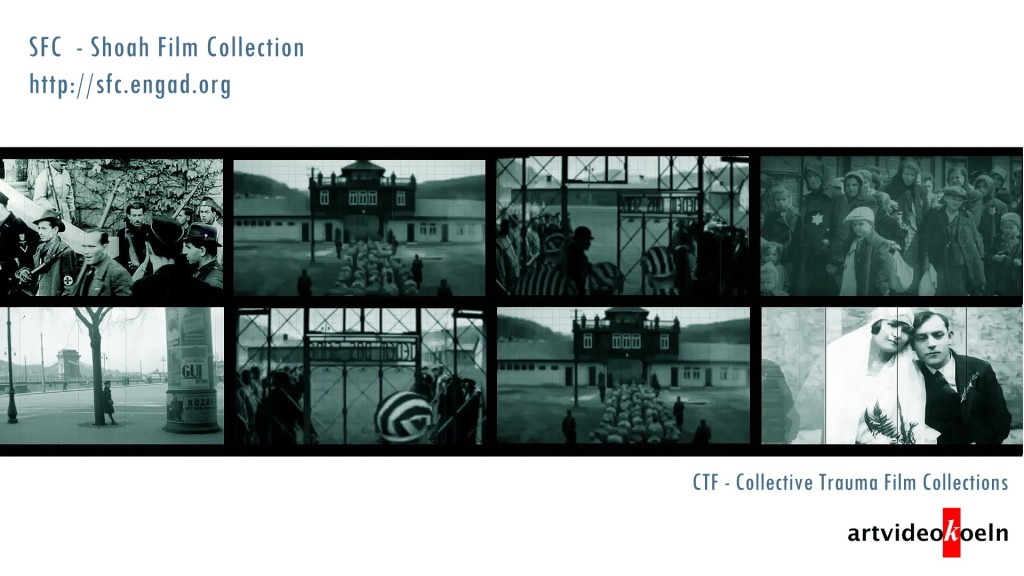
In 2009, he initiated the project “Draft Title: Shoah” and in 2010 he established “Shoah Film Collection” a worldwide unique media art & peace initiative addressed to young generations of artists and film makers to deal artistically with SHOAH and collective trauma caused by totalitarianism by using new perceptions and technologies in order to keep vivid the memory by sensitizing people via art. In 2012, AVMCI – A Virtual Memorial – International Center for Commemorative Interventions was activated providing an experimental event context for the physical and virtual manifestations of Shoah Film Collection. Each manifestation of this unique expanding collection of art films and videos is taken as a starting point for discussing how the memory of the collective trauma can be transferred to future generations via new technologies in art, each time in a different way.
In 2016, Shoah Film Collection received an additional presentation format in shape of a festival – lasting one, two or three days, presenting programs of selected videos from the film collection, entitled: d/i/light – Darkness Into Light Festival.
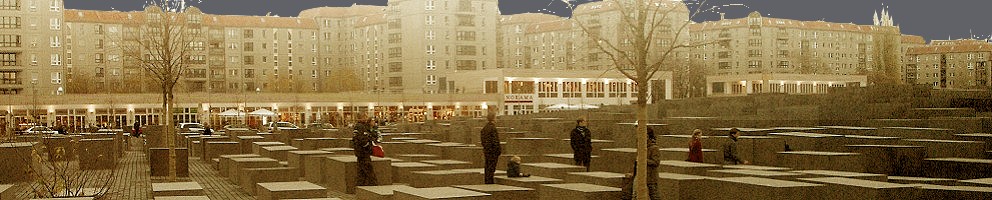
This department is hosting
AVMCI – A Virtual Memorial – International Center for Commemorative Interventions
and its experimental event structure complementing the manifestations of The d/i/light Memorial
aka SFC Shoah Film Collection
It is one of the museum’s most active departments acting cross-platform, cross-departemental and cross-disciplinary


Draft Title: Shoah (2009)
Draft title: Shoah is a media art project by Wilfried Agricola de Cologne, incorporating the artistic activities around “Shoah” and collective trauma caused by totalitarianism, forming the framework for a wide range of artistic activities. Like most projects by Agricola de Cologne, also Draft title: Shoah is built up of the dualism of the project development online and the manifestations in physical space, complementing each other.
 Dealing with the Holocaust did not only start when Agricola de Cologne launched on 27 January 2010 – his media art and peace initiative “Shoah Film Collection” as an artistic contribution against racism and antisemitism, but was already part of the artist’s identity from a child. The Fall of the Berlin Wall in 1989 had ground breaking influence on the course of his life, when he was confronted with the Nazi history on Polish ground by visiting the memorial sites in Poland, and later Germany and Czech Republik – which was motivating and “sensitizing” him to dedicate a big artistic project and many years of his artistic creativity to the victims of Holocaust by reflecting his experiences and juxtaposed them to the Neofascist manifestations taking place in Germany and many other European countries during the 80ies and 90ies of 20th century. Entitled: “1000 Years, 50 Years and still so terribly young”, this project became the main part of the later project
  “A Living Memorial Spaces of Art” – Memorial project against the Forgetting, Racism, Xenophobia and Antisemitism. 1995-1998 – standing under the Patronage of Ignatz Bubis (1927-1999), the President of the Central Jewish Council of Germany. In 1998, the major part of this project was destroyed by right-wing vandalism. But the memory and the shadows of this project became later in 2000 the basis of ” A Virtual Memorial Foundation” and in 2009 of “Draft title: Shoah”.
Presentations under the Patronage of European Parliament

A Virtual Memorial Riga 2012
A Virtual Memorial Vilnius 2013
A Virtual Memorial Warsaw 2013
A Virtual Memorial Milan 2014
Presentations
2011
Offizyna Szczecin (Poland)
Art Museum Arad (Romania)
NCCA – National Center for Contemporary Art St Petersburg (RU)
UAM – Universidad Autonoma Metropolitana Mexico City (MX)
2012
A Virtual Memorial Riga 2012
1st International Conference of Holocaust Museums Riga /Latvia 4-6 June 2012
A Virtual Memorial Phnom Penh 2012
CTF – Collective Trauma Film Collections
A Virtual Memorial Warsaw 2012
2013
2nd International Conference of Holocaust Museums Riga/Latvia 29-30 May 2013
A Virtual Memorial Vilnius 2013
A Virtual Memorial Warsaw 2013
SFCIP – Shoah Film Collection Interview Project
2014
A Virtual Memorial Milan 2014
A Virtual Memorial Timisoara 2014
A Virtual Memorial Jaffa 2014
A Virtual Memorial Moscow 2014
2019
6th International Conference of Holocaust Museums Riga/Latvia 21-22 May 2019
Released in 2018, the 7 Memorials Project is a multi-facetted digital media art context located in the Internet – developed, created and curated by Wilfried Agricola de Cologne.
Based on 7 differently aimed ongoing audio-visual media art contexts, launched between 2010 and 2018, the project is dealing with new forms of commemorating, respectively generating awareness, related to topics that really matter in the currently globally and locally escalating political, social, ecological and cultural situations endangering a free, open and democratic society and Humanity as that fundamental human value, at all.
The Memorial context and its creator are acting as mediators between different parties by demonstrating diversity, eg. activating on one hand artists to articulate and contribute their (artistic) opinion, on the other hand by doing so, activating the audience to use the artistic interventions as the basis for their own reflections.
Each one of the incorporated memorials is rooted on another collection of audio-visual art, which can be experienced online. The Sonic Memorial is the only one using the non-visual medium of sonic art, generating different kinds of associations than the visual medium of video or film: for instance, The Refugee Film Collection, incorporating more than 100 videos from documentary to video art & experimental film.
In total, about 500 contributions by as many artists from about 40 countries give the 7 Memorials project a multi-dimensional character – including & complementing each other: the global, as well as the local: while the online context is available 24 hours to the global community, the individual local manifestation to be realized in an exchange between virtual and physical space in collaboration with worldwide networking partners allow people to meet each other at venues that change their meaning and the awareness related to it by becoming a temporarily limited memorial & space of art.
The manifestations are realized in the framework of “The W:OW Project” – We Are One World – https://wow.nmartproject.net – a global networking project, launched in 2017.
The 7 Memorials for Humanity
The Refugee Memorial
based on – The Refugee Film Collection – why and how become people refugees
d/i/light – Darkness Into Light Memorial
based on Shoah Film Collection – dedicated to the victims of Holocaust
Cambodia 1975-1978 Memorial
based on the Cambodia Film Collection – dedicated to the victims of the genocide in Cambodia and elsewhere
Wake Up! Memorial artists show face against Populism
for an open and free society- against populism, intolerance and racism
Hiroshima-Fukushima Memorial
based on “The Hiroshima//Fukushima Film Collection – dedicated to the victims of nuclear power
The iTERROR Memorial
dedicated to the victims of Islamist terror
The Sonic Memorial
soundart as a tool for commemorating – collective trauma & identity
A Virtual Memorial Foundation
Memorial for the Victims of Terror (11/9/2001)
Memorial for the Victims of Aids
Tsunami 2004 Memorial
Rainforest Memorial
AVMCI – A Virtual Memorial Commemorative Interventions
A Virtual Memorial Riga 2012
A Virtual Memoral Phnom Penh 2012
A Virtual Memorial Vilnius 2013
A Virtual Memorial Warsaw 2013 & 2012
A Virtual Memorial January 2014
[R][R][F] – Remembering-Repressing-Forgetting
Argentina Memorial Project
CTF – Collective Trauma Film Collections
The d/i/light Memorial
SFCIP – Shoah Film Collection Interview Project
The 7 Memorials for Humanity